
The practice of Gyalwa Gyamtso, also known as Red Chenrezig or Five-Deity Jinasagara, is one of the most profound expressions of bodhicitta within the Karma Kagyu tradition. Passed down through Indian mahasiddhas, dakinis, yogis, Karmapas, and great meditation masters such as Karma Pakshi and Jamgön Kongtrül Lodrö Thayé, the practice unites view of Mahamudra with the skillful means of the tantric method to form a complete path to liberation.
The tantric path is a method for transforming ordinary mind and activity into awakened mind and compassionate activity for the benefit of beings. To understand Gyalwa Gyamtso is to understand the Vajrayana view that the awakened qualities we seek are already present within awareness itself, and can be brought fully onto the path through practice.
What is Gyalwa Gyamtso?
The name Gyalwa Gyamtso is the Tibetan rendering of the Sanskrit name Jinasagara, which can be translated as “Ocean of Victorious Ones” or “Ocean of Buddhas.” The practice centers on Red Chenrezig, a form of Avalokiteshvara, the bodhisattva who embodies the compassion of all buddhas.
When people first encounter Vajrayana Buddhism, deity practices can appear exotic or outside our everyday experience. The elaborate imagery, mantras, rituals, and fierce or beautiful forms can seem like symbols or outer forms of practice. But within Vajrayana, deity practice is not based on worshipping something outside ourselves. The purpose is transforming our ordinary body, speech, and mind into awakened body, speech, and mind. Kongtrul says in the Lotus Stem manual on the practice:
The deity’s body is the self-display of mind.
Through visualization, mantra, and meditation, practitioners gradually train in recognizing awakened qualities as inseparable from the nature of mind itself. The tantric path works directly with our body, speech, mind, desire, and even confusion itself as methods for awakening.
Within the traditions of Mahamudra and Dzogchen, the view begins with recognition of the fundamental ground, the originally pure nature of awareness. Tantric practice provides methods for stabilizing and embodying that recognition within lived experience.
Gyalwa Gyamtso belongs to the class of Highest Yoga Tantra and has long been regarded as one of the profound practice cycles of the Karma Kagyu lineage. Compassion here is understood as awakened responsiveness arising from direct recognition of the nature of reality.
The Five-Deity mandala expresses this complete vision of the path.
At the center of the mandala is Red Chenrezig, representing boundless compassion inseparable from the wisdom of emptiness. Alongside him appear Hayagriva, embodying fierce compassionate activity; Guhyajnana Dakini, representing wisdom and the activity of the dakini principle; the lineage of gurus above; and protector figures below that symbolize enlightened activity protecting the continuity of the Dharma and removing obstacles on the path. Together, the mandala represents the integrated expressions of the path of liberation.
This is one reason the practice became so important within the Karma Kagyu tradition. Gyalwa Gyamtso was understood as a complete Vajrayana path capable of transforming every dimension of human experience into the ground of awakening.
The Lineage of Gyalwa Gyamtso
From the Indian Mahasiddhas to Tibet
The origins of Gyalwa Gyamtso trace back to the Indian tantric traditions of the mahasiddhas, where the practice passed through great masters associated with Avalokiteshvara, Padmasambhava, and the dakini lineages before entering Tibet.
Within the Karma Kagyu, the transmission is closely connected with Rechungpa, one of the main disciples of Milarepa. According to lineage histories, Marpa recognized that certain profound tantric transmissions had not yet fully reached Tibet and instructed Milarepa that they should be brought from India if possible. Milarepa later sent Rechungpa to India in search of these instructions.
During his travels, Rechungpa received transmissions of Gyalwa Gyamtso from several masters, most notably the female mahasiddha Machig Drupe Gyalmo. Through these encounters, the practice entered the Kagyu lineage as a deeply experiential and yogic transmission rooted in direct realization rather than scholastic study alone.
From the beginning, Gyalwa Gyamtso was preserved as a living stream of realization transmitted from teacher to disciple through retreat, devotion, meditation, and direct experience. Over time, it became one of the principal yidam practices of the Karma Kagyu lineage alongside Chakrasamvara and Vajrayogini.
Karma Pakshi and the Early Karmapas
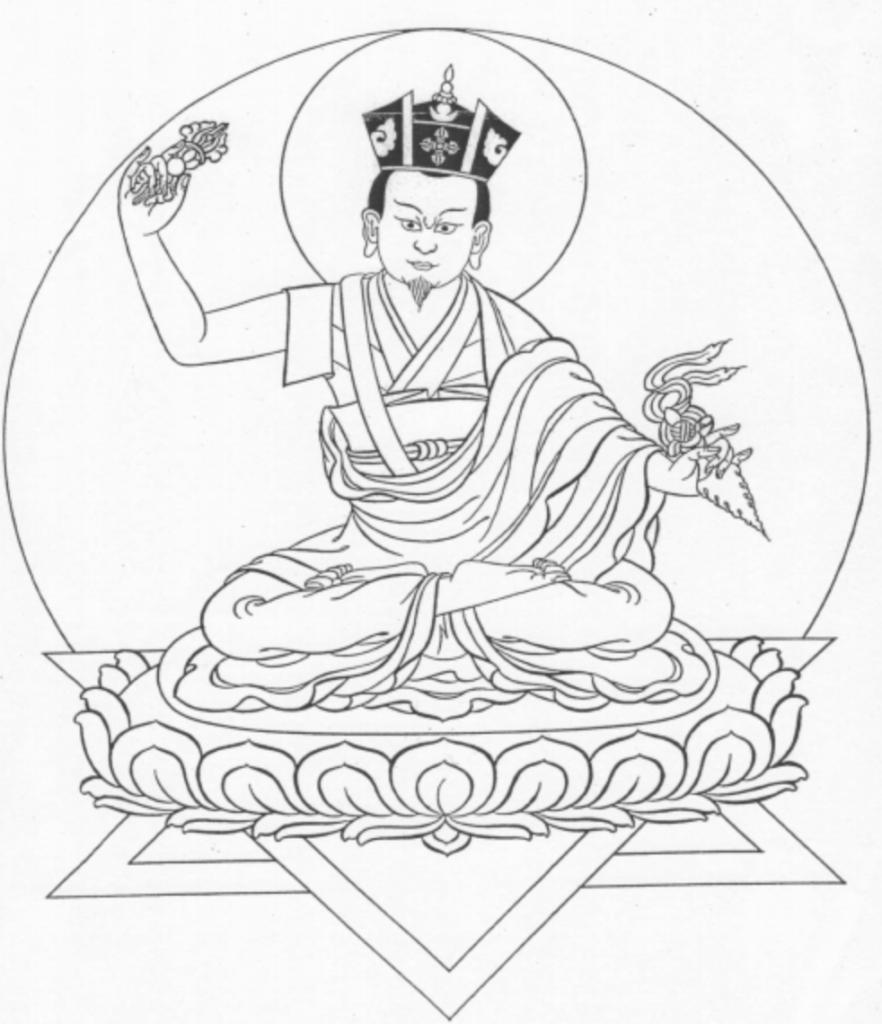
Guru yoga of Karma Pakshi as depicted by the great Terton Yongey Mingyur Dorje
The practice of Gyalwa Gyamtso became especially important through Karma Pakshi, the first recognized tulku in Tibet and one of the great meditation masters of the Karma Kagyu.
Karma Pakshi practiced the Five-Deity Jinasagara cycle intensively for many years in retreat near the sacred mountain Khawa Karpo. During this period, he experienced profound visions of the deity and eventually became inseparable from Chenrezig.
The Five-Deity mandala of Jinasagara became Karma Pakshi’s principal yidam practice and remained central within the lineage of the Karmapas. Karma Pakshi himself once stated:
One could think there is a lineage between other masters and Jinasagara and myself, Karmapa. But it is equally valid to think there is no lineage in between me and the deity.
This points to the realization that Karma Pakshi had become inseparable from the yidam deity. Later guru yoga practices in the Kagyu tradition often placed Karma Pakshi as the principal figure because the lineage understood his realization and the deity as being indivisible.
Both the First and Second Karmapas were raised within Nyingma family traditions and maintained Gyalwa Gyamtso as one of their principal practices. Through this practice, Karma Pakshi became renowned throughout Tibet and Mongolia for extraordinary compassionate activity, fearlessness, and spiritual accomplishment or siddhis. Traditional histories describe his ability to benefit beings, influence Mongol rulers, and spread the Dharma as arising directly from his realization through Gyalwa Gyamtso practice.
For the Karma Kagyu lineage, Karma Pakshi’s life became a living demonstration of what the practice was intended to cultivate: compassion expressed directly in the world through wisdom, courage, and realization.
Just as space is endless, Karma Pakshi’s activities for beings was just as vast.
The lineage then passed through Karma Pakshi’s disciple Nyenre Gon to the Third Karmapa Rangjung Dorje and continued through successive Karmapas and great masters such as Jamgön Kongtrül Lodrö Thayé, Karma Chagme, the Shamarpas, many of whom maintained Gyalwa Gyamtso as one of their principal yidam practices.
Jamgön Kongtrül and the Five-Deity Practice
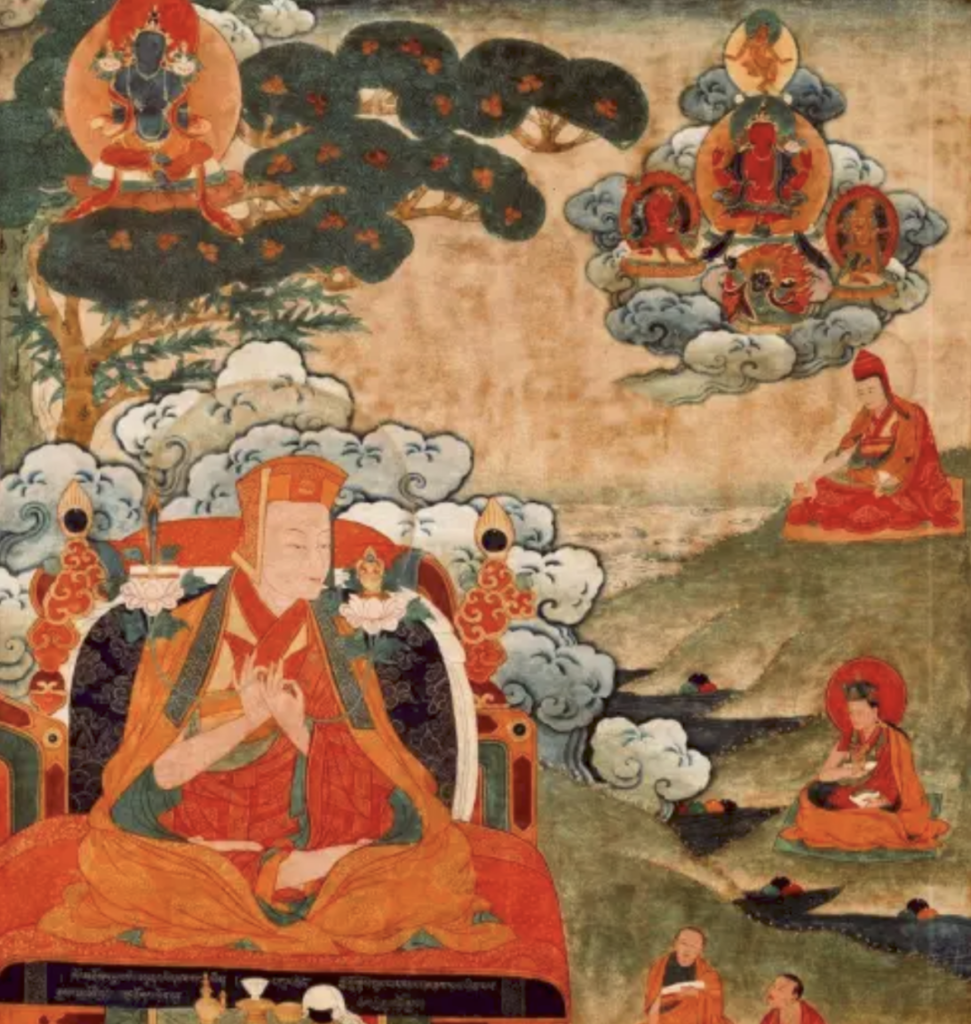
The Five-Deity Jinasagara cycle traces back to the Indian mahasiddha traditions and was transmitted into Tibet through Rechungpa after receiving the practice from the female siddha Machig Drupey Gyalmo during his travels in India. The practice was then passed down through the Karma Kagyu lineage and later arranged into verse by Rangjung Dorje, helping establish it as one of the important practice cycles of the Karmapas.
Over time, multiple presentations of Gyalwa Gyamtso developed within Tibetan Buddhism, including both Five-Deity and Nine-Deity mandala systems. Within the Karma Kagyu lineage, the Nine-Deity form became associated with more elaborate retreat systems, particularly the traditional three-year retreat, while the Five-Deity form became widely practiced as a concise yet complete expression of the lineage.
Centuries later, Jamgön Kongtrül Lodrö Thayé played an important role in preserving and revitalizing the practice during the Rimé movement. Kongtrül gathered transmissions, empowerments, and practice instructions from many lineages to help ensure they would survive for future generations. His arrangements and compilations of the Five-Deity Jinasagara practice, including its inclusion within the Rinchen Terdzö, helped make the lineage more accessible and sustainable during a period when many traditions risked decline.
For Kongtrül, Gyalwa Gyamtso was one of his principal personal practices and a direct path for uniting bodhicitta, the tantric method, and realization of Mahamudra into lived experience.
The Meaning of the Mandala
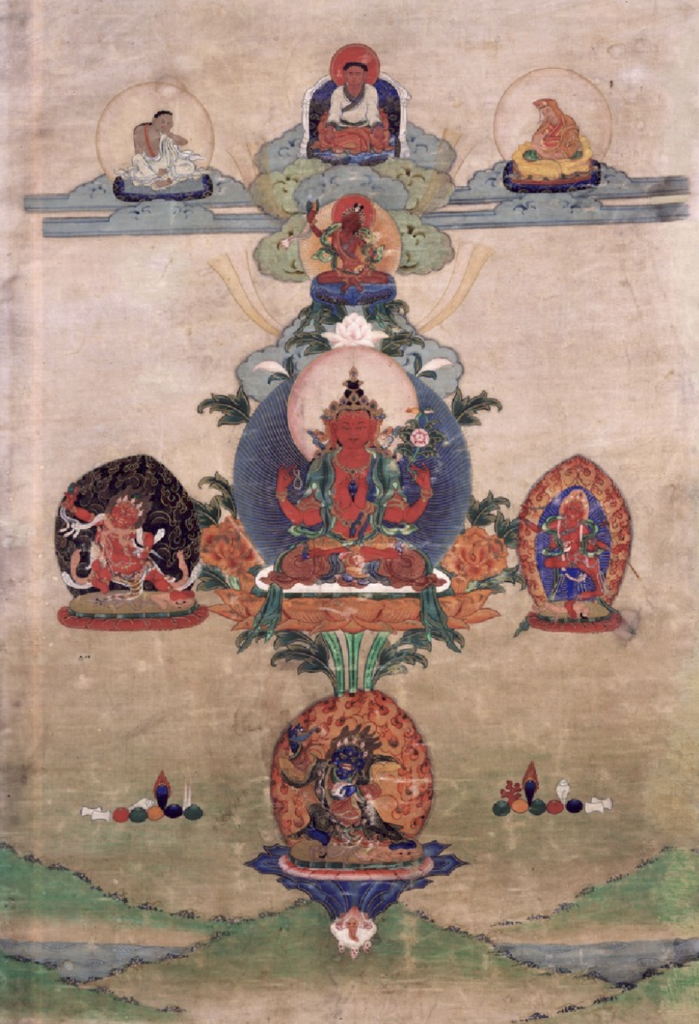
For many western readers, tantric imagery can initially feel foreign or difficult to understand. Peaceful and wrathful deities, dakinis, protectors, and visualizations may appear mythological or symbolic in the ordinary sense of the word. But within Vajrayana practice, the mandala is understood as a way of training our body, speech, and mind.
Each figure represents awakened qualities already present within the nature of mind.
The Five-Deity and Nine-Deity forms are the common presentations of Gyalwa Gyamtso, especially within the Karma Kagyu and broader Tibetan traditions, but historically the cycle developed into a much larger body of practices with multiple presentations, arrangements, and associated transmissions. The Five-Deity mandala is the most common presentation found within the Karma Kagyu lineage coming from Karma Pakshi. In the Lotus Stem manual, Kongtrul says:
Externally, the assembly of Jinasagara;
Internally, they are arranged within the body.
Secretly, they are arranged within the channels.
Most secretly, thatness is arranged within the mind.
These four levels summarize the inner logic of tantric practice itself. The outer mandala begins with visualization and ritual practice. The inner and secret dimensions work directly with the subtle channels and winds. Ultimately, the practice resolves into recognition of the nature of mind itself.
At the center is Red Chenrezig, the embodiment of boundless compassion inseparable from wisdom. His red color symbolizes magnetizing activity and the transformative power of compassionate presence.
Alongside him appears Hayagriva, representing fierce compassion. In Vajrayana, compassion is not always gentle or passive. Sometimes awakened activity appears direct, intense, or protective when needed to cut through confusion and suffering.
The presence of the Secret Wisdom Guhyajnana Dakini represents wisdom and the dakini principle: the dynamic, living energy of awakened mind. The guru lineage above symbolizes the continuity of realization transmitted from teacher to disciple, while the protectors below represent by Bernakchen symbolize the activity that guards the integrity of the path.
Gyalwa Gyamtso does not approach awakening by rejecting human experience. It transforms every dimension of experience into the path itself. Through visualization, mantra, and meditation, practitioners gradually loosen the grip of ordinary identity and begin training in a different way of perceiving themselves and the world. The purpose is not escape from the world, but direct immersion and participation in it with greater compassion, clarity, and freedom.
The Practice of Gyalwa Gyamtso Today
Modern life gives us access to more information and spiritual teachings than ever before. Yet many people still feel confused, distracted, and unsure how to actually transform the mind and our experience. It is easy for spiritual practice to become another form of self-improvement, motivated by temporary inspiration or intellectual interest without ever fully reshaping how we live.
This is part of what makes the tantric path so powerful and enduring within the Tibetan tradition. The practice does not separate compassion from wisdom, meditation from daily life, or awakening from everyday experience. It offers a complete path for transforming ordinary experience into the ground of awakening itself. Kongtrul says:
All visible forms are the nature of the Five Oceans’ deities.
All audible sounds are the self-sound of the ten syllables.
All thoughts and memories are the self-arising of the innate Dharmakaya Mahamudra.
For centuries, this lineage has been carried through the lives of practitioners who preserved it through direct realization. From the Indian mahasiddhas to Rechungpa, from Karma Pakshi to Jamgön Kongtrül Lodrö Thayé, the practice has remained alive because it was continuously embodied and transmitted from teacher to disciple.
At its heart, Gyalwa Gyamtso reminds us that awakening is not an escape from the world. It is the embodiment of bodhicitta in this world for the benefit of all beings. The path is not about becoming something transcendent or other worldly, but transforming the whole of our experience into wisdom, responsiveness, and love for others.
In this way, the practice ultimately resolves into Mahamudra itself: recognition of awareness beyond grasping, elaboration, and separation, where compassion naturally expresses itself for the benefit of beings.
This living continuity extends into the present day. Near the conclusion of his three-year retreat at Rumtek Monastery, Younge Khachab Rinpoche received the Gyalwa Gyamtso transmission from Gyaltsab Rinpoche and engaged in several months of intensive approach practice and retreat on the Jinasagara cycle, continuing the same stream of practice carried through the Karma Kagyu lineage for generations.
This summer, during YDL’s annual retreat, Rinpoche will grant the short torma empowerment of Gyalwa Gyamtso and offer guidance on the practice. For those drawn to the Vajrayana path, it is an opportunity to establish a direct connection with a living lineage of practice and realization.
References:
The Root Text of the Cane Staff by Vajragarbha: https://rtz.tsadra.org/index.php/Terdzo-ZHA-042
Lineage Prayer by Karma Pakshi: https://rtz.tsadra.org/index.php/Terdzo-ZHA-044
The Clear Realization of Gyalwa Gyamtso Daily Practice by Third Karmapa Rangjung Dorje: http://purl.bdrc.io/resource/MW3PD1288_AB37F0
The Daily Practice of the Five-Deity Gyalwa Gyamtso by Jamgon Kongtrul: https://rtz.tsadra.org/index.php/Terdzo-ZHA-046
Lotus Stem Practice Manual by Jamgon Kongtrul: https://rtz.tsadra.org/index.php/Terdzo-ZHA-048